
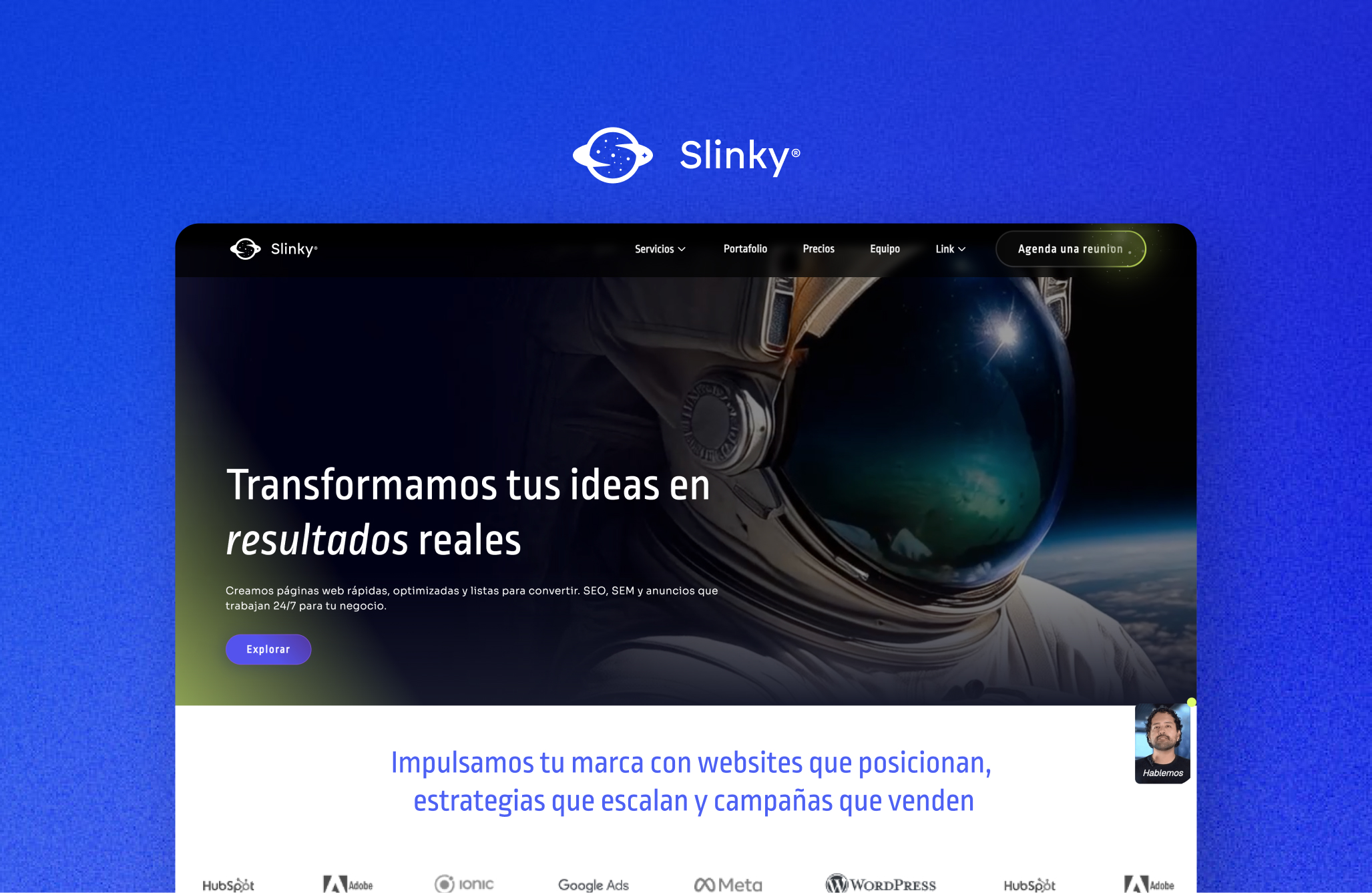
Slinky — Website Design & Visual Concept Definition
Role
Visual & UX/UI Designer
Scope
Website Design · Visual Concept · Webflow · UX · SEO
Industry
Creative / Digital Studio
CONTEXT & CHALLENGE
Slinky is a creative digital studio with a growing online presence.
The existing website lacked a clearly defined visual concept, resulting in inconsistent layouts, unclear hierarchy, and a fragmented brand perception. Additionally, structural and performance limitations made the site harder to maintain and scale.
The challenge was to redesign the website by defining a strong visual concept, improving clarity and consistency, and implementing the solution in Webflow with performance and SEO in mind.
My Role
worked as a Senior Visual & UI Designer, responsible for the website redesign, visual concept definition, and Webflow implementation.
Defining the Problem
The main challenge was not only updating the look of the website, but addressing the lack of a shared visual direction.
Without a defined visual concept, pages evolved independently, increasing visual noise and making the experience less coherent and harder to scale.
Visual Concept Definition
A key part of the project was defining a clear visual concept that could guide design decisions across the entire website.
The goal was to balance Slinky’s creative identity with structure, clarity, and usability, ensuring the site felt expressive but consistent.
Website Design
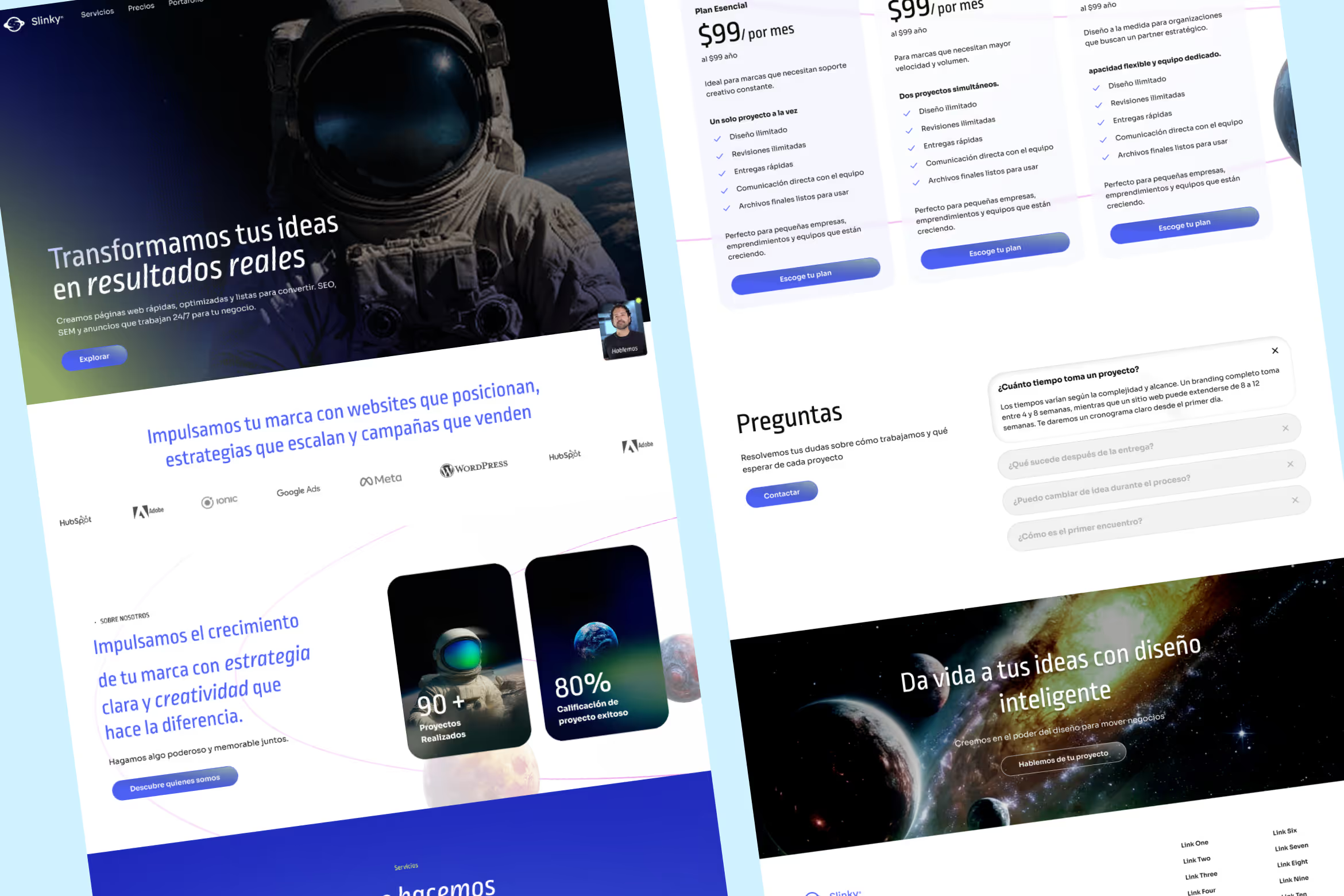
Based on the defined visual concept, the website was redesigned with a focus on clarity, readability, and consistency.
Instead of designing isolated pages, the structure was built around reusable sections and predictable layout patterns.
WEBFLOW MIGRATION
Migrating to Webflow was a strategic decision to improve scalability and speed.
The UI system was translated into reusable Webflow components, enabling faster page creation and reducing design-to-development friction.
- Clear content hierarchy
- Consistent spacing and alignment
- Responsive behavior across devices
- Visual consistency across all pages
Webflow Implementation
The final design was implemented in Webflow using reusable components and a structured class system.
This approach made the website easier to maintain and allowed faster updates without compromising the visual concept.
